Scaling D2C eCommerce Through ROAS-Focused Performance Marketing
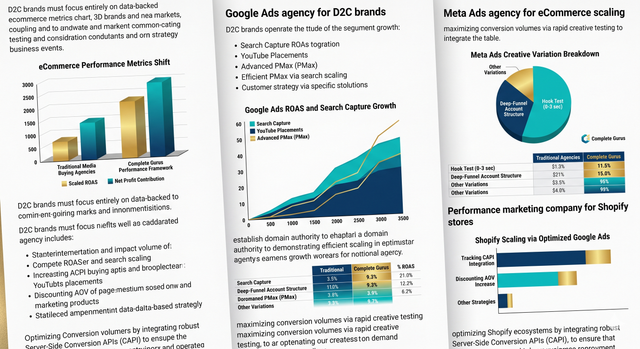
For modern direct-to-consumer brands, growth depends on far more than running ads and waiting for sales. Real success is built through a structured performance framework where campaigns, feeds, creatives, audiences and landing pages are evaluated by profitability. Brands searching for the Best Google Ads agency for D2C brands, the Top-rated Meta Ads agency for eCommerce scaling or a Performance marketing company for Shopify stores are usually looking for one thing: profitable scale. In a competitive market, revenue alone is not enough. A business can boost sales yet lose margin due to higher acquisition costs, poor tracking or inefficient campaign setup. For this reason, effective eCommerce scaling relies on a data-focused model measuring ROAS, CAC, AOV, repeat behaviour and net profitability.
The Importance of ROAS in D2C Scaling
ROAS remains a critical metric in D2C advertising as it reflects how effectively advertising investment converts into revenue. That said, ROAS must not be analysed in isolation. An ad set may achieve high ROAS yet lack scalability, whereas another may seem weaker but bring stronger lifetime customers. The real goal is profitable growth, where every pound spent supports a clear commercial outcome. This requires D2C brands to evaluate margins, logistics costs, discounts, returns, repeat buying and customer lifetime metrics. The eCommerce brands best digital marketing agency for ROAS will not simply chase cheap clicks or surface-level conversions. Instead, it analyses the full customer journey and creates campaigns that drive sustainable revenue across multiple channels.
Targeting High-Intent Users with Google Ads
Google Ads continues to perform strongly as it targets users actively searching with intent. A customer looking for a specific product, category or solution is often closer to purchase than someone casually scrolling through social media. This is why many brands seek the Best Google performance max optimization agency eCommerce support to improve campaign structure, product visibility and conversion value. Performance Max can be effective, but only when product feeds, audience signals, creative assets and conversion goals are carefully organised. If unmanaged, automation may prioritise products that reduce profitability. An improved approach organises products based on margin, inventory, performance and intent to maximise value.
Optimising Product Feeds for Campaign Success
Effective Performance Max campaigns start with a well-organised and accurate product feed. Product titles, descriptions, visuals, pricing and labels impact campaign outcomes. For Shopify and other eCommerce stores, feed optimisation should be treated as an ongoing growth function rather than a one-time setup. Products can be grouped by best sellers, high-margin items, seasonal demand, clearance Top eCommerce growth agency for Shopify scaling stock, new arrivals or repeat-purchase potential. This gives advertisers better control over where the budget flows. A Data-driven eCommerce performance marketing agency analyses insights and performance data to improve campaigns continuously. The goal is to direct automation using reliable data and strategy.
Meta Ads for Demand Creation and Scaling
Meta advertising contributes significantly to D2C expansion. Google captures search intent, whereas Meta builds interest through storytelling. Companies choosing the Top Meta Ads media buying agency for scaling D2C need a team skilled in both creative and media strategy. Often, the best-performing ad is driven by messaging rather than design quality. Testing different opening lines, product demonstrations, lifestyle visuals, founder messages, customer reactions and offer formats helps identify what makes shoppers stop, engage and buy.
Creative Testing as a Growth Engine
Ad fatigue remains a major issue in social campaigns. Ads often lose effectiveness over time. Hence, ongoing experimentation is necessary. A clear testing model analyses messaging, formats and objections. Short-form videos, testimonial-led creatives, comparison ads, educational content and product demonstrations can all support different stages of the buying journey. A Best digital marketing agency for high-ROAS ad spend evaluates creatives based on actual conversions. The key metric is not clicks but profitable customer acquisition.
Why Shopify Stores Need Specialist Performance Marketing
While Shopify brands grow rapidly, sustainable scaling needs proper integration. A Performance marketing company for Shopify stores connects store analytics with campaign outcomes. Often, poor results stem from weak conversion experiences rather than ads. Poor UX and unclear value propositions increase CAC. By improving both traffic quality and store conversion, brands can raise ROAS without simply increasing spend.
Improving Tracking and Attribution Accuracy
Reliable tracking is critical for campaign success. Tracking challenges arise from privacy and cross-device usage. D2C brands need stronger measurement systems that include server-side tracking, clean event setup, proper purchase values and first-party customer data. Accurate inputs enable stronger algorithm performance. A Performance marketing agency for D2C brands should review attribution carefully and avoid making decisions based only on one platform’s reported numbers. Blending platform data with store analytics and profit metrics gives a more reliable view of performance.
Building a Scalable ROAS Framework
Scaling must be controlled. Rapid spend increases can reduce efficiency. If it stays too conservative, competitors may capture market share. A robust system sets targets for growth and profitability. Different campaign types support various funnel stages. A Top eCommerce growth agency for Shopify scaling integrates ads, offers and data analysis.
Finding the Right Agency for Growth
An agency should be evaluated based on strategy, reporting and testing approach. The right partner is not always the fastest-growing option. It is the team that understands margins, customer behaviour, creative performance, attribution and long-term brand value. Transparency matters when budgets are high, as small optimisations drive results.
Conclusion
D2C eCommerce growth is no longer about buying traffic at scale and hoping for the best. Growth depends on structured optimisation across ads, data and creatives. A Data-driven eCommerce performance marketing agency replaces guesswork with measurable insights. Regardless of the goal, success comes from structured and tested strategies. For brands ready to scale with confidence, performance marketing must become a complete growth system rather than a simple advertising activity.